
Benito Martinez Ocasio, better known as Bad Bunny, is set to perform on the world’s biggest stage this Sunday when he performs the halftime show at Super Bowl LX. The announcement made last September has caused a lot of pushback and debate from many different fans asking the question: Why him?
Technology has us living in a time where we are more connected than ever, but we are also arguing louder than ever over who we are and what we stand for. This makes Bad Bunny the perfect candidate for this year’s halftime show. His music brings people together across languages, cultures, and generations.
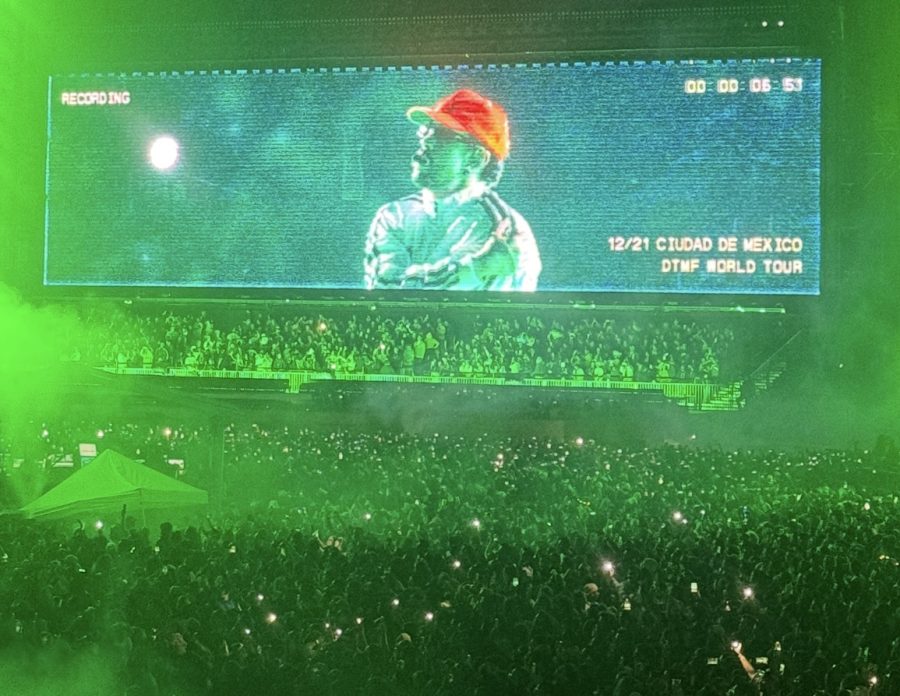
His latest album “Debi Tirar Mas Fotos,” released on January 5, 2025, is a perfect example.
From samples in songs like “NuevaYol” to originals like “Baile Inolvidable” and “DTMF,” the album blends traditional Latin sounds like salsa with modern reggaeton and new rhythms. The result is an album that honors cultural roots while speaking to listeners all over the world. For many Hispanics, it feels like a celebration of identity and nostalgia. For others, it offers connection to a culture that is so vibrant and authentic.
Much of the criticism surrounding his performance comes from language and popularity. Some argue that he is not ‘American enough,’ or that he does not fit the Super Bowl’s audience, but numbers tell a different story.
On February 1, he won the Grammy for Album of the Year and Best Musica Urbana Album for his album “DebI TiRAR MaS FOToS.” His 2020 album “El Ultimo Tour del Mundo” broke barriers by being the first all-Spanish album to hit no.1 on the Billboard 200. He holds Spotify’s record for most listened to album with his 2022 album “Un Verano Sin Ti” with over 20 billion streams, and he was the world’s most listened to artist in 2025 with over 19.8 billion streams.
Hearing Bad Bunny represent the Latino community carries real weight. His music speaks to love, culture and nostalgia, while unapologetically standing against the injustices Latino’s continue to face. Broadcasting that front and center on one of the world’s most watched events makes it deeply significant. This is more than just a performance. This is representation.
As a Latina, this is not about numbers or awards. To see an artist who sings almost entirely in Spanish headline the Super Bowl is personal. I have listened to Bad Bunny for years. I have watched him go from someone beloved in the Latino community to someone the whole world has discovered.
Bad Bunny, originally from San Juan, Puerto Rico, is a record-breaking rapper, singer and reggaeton artist. He came from humble beginnings on SoundCloud before breaking through the industry through collaborations with huge names in the industry on songs like “I Like It” and “MIA.” Since then, he has released eight total albums of his own and collaborated with some of the biggest names in music. He has done all of this while staying true to the sounds, stories, and culture that shaped him.
His presence on this stage feels like a win for Latino representation because it brings our voices into the spotlight on where they have rarely been shone before, especially when those voices are often sidelined in bigger debates about belonging.
This Sunday, when Bad Bunny steps onto the Super Bowl stage, it will not be just another performance. It will be a global moment.
Millions will tune in, not just to watch one of the most successful artists of our time, but also to witness what it means when culture, language, and identity take the stage for the world to see. The question will not be, “Why him?” The question will become, “What took so long?”
The Seattle Seahawks and the New England Patriots will face one another in Super Bowl LX starting at 6:30 p.m. on February 8 on NBC and Universo. The Halftime show is estimated to begin at around 8 p.m.